What is preventative pet care, and what does it mean?
Preventative pet care simply means taking regular, practical steps to protect your pet’s health before there is an obvious problem. It covers much more than vaccinations. Routine health checks, parasite control, dental care, weight monitoring and advice that changes with your pet’s age and lifestyle can all form part of a sensible preventative healthcare plan.
It is not about trying to predict every illness. Pets can still become unwell even when their routine care is up to date. The aim is to lower avoidable risks, keep a closer eye on changes over time and give your veterinary team more opportunities to spot concerns while they may still be subtle.
At Live Well Vets, our teams in Llantrisant, Caerphilly and Whitchurch help pet owners across South Wales build preventative care around the individual pet rather than a one-size-fits-all checklist.
What does preventative pet care include?
The exact plan will vary between a young indoor cat, an active dog that spends weekends in the countryside, a rabbit, or a senior pet with an ongoing health condition. In general, preventative care brings together several areas of everyday health and wellbeing.
1. Regular health checks
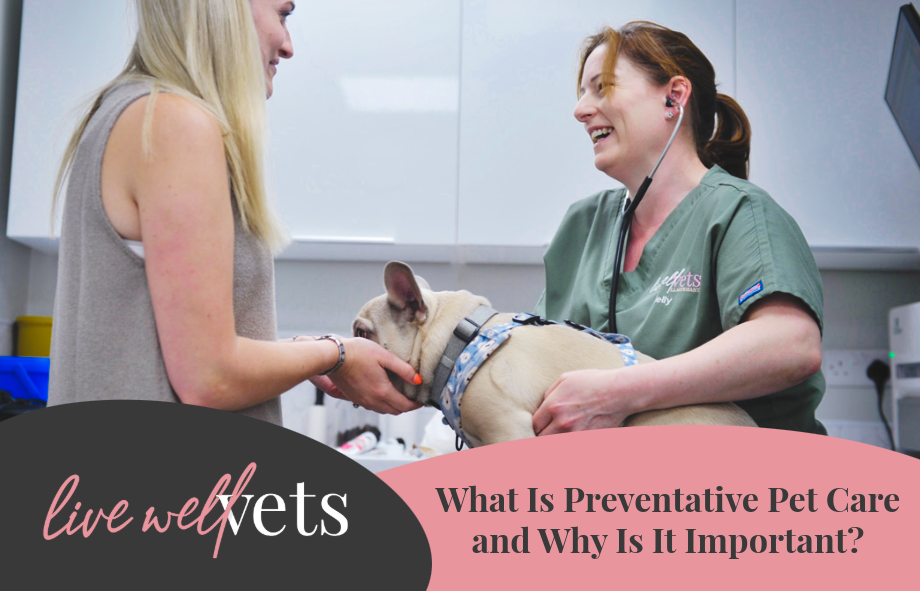
A routine examination gives your vet or veterinary nurse the chance to look at your pet as a whole, not just one symptom. Depending on the appointment, this can include weight and body condition, teeth and gums, skin and coat, heart and lungs, joints and mobility, eyes and ears, and any new lumps or changes you have noticed at home.
These appointments also create a useful baseline. A small change in weight, behaviour, thirst, appetite or mobility may be easier to recognise when the team knows what is normal for your pet. How often a pet should be checked depends on age and health: many healthy adults are reviewed at least annually, while puppies, kittens, rabbits, senior pets and animals with existing conditions may need more frequent contact.
2. Vaccinations based on your pet's risk
Vaccination remains an important part of protecting dogs, cats and rabbits against serious infectious diseases. Current vaccination guidance distinguishes between core vaccines, which are recommended broadly, and additional vaccines that may be advised according to lifestyle and local risk.
That is why the best vaccination plan is the one discussed with your vet. Factors such as age, previous vaccination history, contact with other animals, boarding, travel and time spent outdoors can all affect what is appropriate and when boosters are due.
3. Flea, tick and worm prevention
Parasite prevention is another area where individual risk matters. A dog that regularly walks through long grass, a cat that hunts, and a pet that rarely goes outdoors do not necessarily have identical parasite exposure.
Your veterinary team can recommend flea, tick and worm control based on your pet’s lifestyle and health, while also considering responsible use of veterinary medicines. Keeping treatments on schedule matters, but so does using the right product for the right pet rather than treating blindly.
4. Healthy weight, diet and exercise
Weight can creep up gradually, so it is easy to miss when you see your pet every day. Regular weigh-ins and body condition checks can flag a trend before it becomes harder to reverse.
Maintaining a healthy weight can support mobility, breathing, comfort and long-term wellbeing. Your vet or nurse can help you review portion sizes, treats, activity and an appropriate target weight. At Live Well Vets, nurse clinics include weight and mobility support for pets that need a little extra help staying on track.
5. Dental care
Dental disease can cause significant discomfort, yet pets do not always show obvious signs early on. Routine mouth checks can identify tartar, inflamed gums, damaged teeth or other concerns before they become more advanced.
Home care matters too. Where your pet will tolerate it, regular tooth brushing with pet-safe toothpaste is one of the most useful habits you can build. Your veterinary team can also advise on suitable dental products and whether your pet needs a more detailed dental assessment. Learn more about the signs of dental problems in pets.
6. Microchipping and identification
Microchipping does not prevent illness, but it is an important part of responsible preventative care because it improves the chance of a lost pet being identified and returned home.
Dogs across the UK must be microchipped and registered by eight weeks of age. Cat microchipping rules differ by nation: in Wales it is not currently compulsory, although it is still strongly worth considering. Whichever species you have, remember that a chip only works as intended if the registration details are kept up to date when you move house or change phone number.
7. Neutering and reproductive health
Neutering can be part of a preventative healthcare discussion, but the right decision and timing are not identical for every pet. Species, breed, sex, age, behaviour, lifestyle and individual health all matter.
Rather than relying on a fixed age from a generic checklist, speak to your vet about the advantages, disadvantages and most appropriate timing for your dog, cat or rabbit.
Why is preventative care so important?
Preventative healthcare is valuable because it creates more opportunities to protect health rather than only reacting when something has gone wrong. Some of the main benefits are:
- Lowering the risk of certain infectious diseases through appropriate vaccination.
- Reducing the risk and impact of fleas, ticks and worms with tailored parasite control.
- Spotting changes in weight, teeth, skin, mobility or general health earlier.
- Giving owners regular opportunities to ask questions about diet, behaviour, exercise and life-stage changes.
- Helping pets become familiar with the practice during routine visits, rather than only attending when they are ill or in pain.
- Keeping routine care organised, particularly when several vaccinations, treatments or checks are due at different points in the year.
Book your pet’s preventative health check
Live Well Vets provides preventative healthcare at our practices in Llantrisant, Caerphilly and Whitchurch, Cardiff. Our teams can help with health checks, vaccinations, parasite advice, dental care, weight monitoring and support as your pet gets older.
Book an appointment with your nearest practice to review what your pet is due, ask questions and put together a plan that suits their needs.

Preventative care changes as your pet gets older
A good preventative plan should evolve with your pet. The priorities for a puppy or kitten are not the same as those for a ten-year-old dog or cat, and rabbits have their own specific health needs.
Puppies, kittens and young pets
Early appointments often focus on vaccination courses, parasite risk, microchipping, nutrition, growth, dental development, socialisation and discussions around neutering. This is also a useful stage for building positive handling habits and getting your pet comfortable with routine veterinary visits. Explore our puppy and kitten package for your pet’s first steps.
Adult pets
For healthy adult pets, preventative care is about maintaining the basics consistently: health reviews, appropriate boosters, parasite control, dental checks, weight management and attention to any gradual changes at home.
Senior pets
As pets age, small changes can become more significant. Stiffness, altered sleep, weight change, drinking more, reduced grooming or becoming less keen to jump can all be worth discussing. Your vet may recommend more frequent examinations or additional monitoring depending on the pet’s age, species and medical history.
Rabbits
Rabbits also benefit from structured preventative care, including vaccination, regular health and dental assessment, weight monitoring, nail care, appropriate diet and advice on seasonal risks such as flystrike. Because rabbits can hide signs of illness, changes in appetite, droppings or behaviour should be taken seriously.
How often should my pet have preventative care?
There is no single interval that suits every pet. A healthy adult may only need a full veterinary health review around once a year, while younger, older or medically complex pets may benefit from more regular checks. Vaccination and parasite schedules also vary according to the product used and the pet’s individual risk.
If you are unsure what is due, ask your veterinary team to review your pet’s record. It is often easier to plan a full year of routine care at once than to rely on remembering each item separately.

Simple preventative care tips you can use at home
- Keep vaccination, parasite treatment and routine appointment reminders in your phone or calendar.
- Check your pet's weight and body shape regularly, not just the number on the scales.
- Look at your pet's teeth and gums when they are relaxed, and build up tooth brushing gradually if appropriate.
- Run your hands over your pet occasionally so you are more likely to notice new lumps, sore areas or skin changes.
- Keep microchip registration details up to date.
- Tell your vet if your pet's lifestyle changes, for example if they start travelling, hunting, boarding, mixing with more animals or spending more time outdoors.
Do not wait for a routine appointment if your pet seems unwell. Preventative care supports health, but it is not a substitute for prompt veterinary attention when something is wrong.
FAQs
Frequently asked questions about preventative pet care
What is preventative pet care?
Preventative pet care is routine healthcare designed to reduce avoidable health risks and monitor a pet’s wellbeing before there is an obvious problem. It can include health checks, vaccinations, parasite control, dental care, weight management, microchipping and life-stage advice.
How often should my dog or cat have a health check?
Many healthy adult pets are reviewed at least once a year, but the right frequency depends on age, species, health and individual risk. Puppies, kittens, senior pets and animals with ongoing conditions may need more frequent checks.
Do all pets need the same vaccinations?
No. Core vaccines are recommended broadly, while other vaccines may depend on lifestyle and local disease risk. Your vet can advise on the most appropriate schedule for your pet.
Should indoor cats still have preventative care?
Yes. Indoor cats still benefit from routine health and dental checks, vaccination review, weight monitoring and individual parasite-risk advice. Lower exposure to some risks does not remove the need for veterinary care.
Is cat microchipping compulsory in Wales?
No. As of September 2026, cat microchipping is not compulsory in Wales, although it is recommended as a reliable form of permanent identification. Dogs across the UK must be microchipped and registered by eight weeks of age.
Does a pet health plan replace pet insurance?
No. A health plan is generally designed for routine preventative care, while pet insurance is intended to help with unexpected illness or injury, subject to the policy terms. Many owners use both for different purposes. Read more about pet health plans and pet insurance.
Where can I book preventative pet care in South Wales?
Live Well Vets offers routine preventative veterinary care at its practices in Llantrisant, Caerphilly and Whitchurch, Cardiff. Owners can book routine appointments online or contact their nearest practice.
Book your pet’s preventative health check
Live Well Vets provides preventative healthcare at our practices in Llantrisant, Caerphilly and Whitchurch, Cardiff. Our teams can help with health checks, vaccinations, parasite advice, dental care, weight monitoring and support as your pet gets older.
Book an appointment with your nearest practice to review what your pet is due, ask questions and put together a plan that suits their needs.

Make routine care easier with the Live Well Pet Club
Spread the cost of routine preventative care with monthly payments. Rabbit plans are also available, with benefits tailored to their needs.
Membership includes...
- Vaccinations
- Health Checks
- Flea, tick and worm treatment delivered to your door
- Unlimited nail clips
- Unlimited weight clinics