
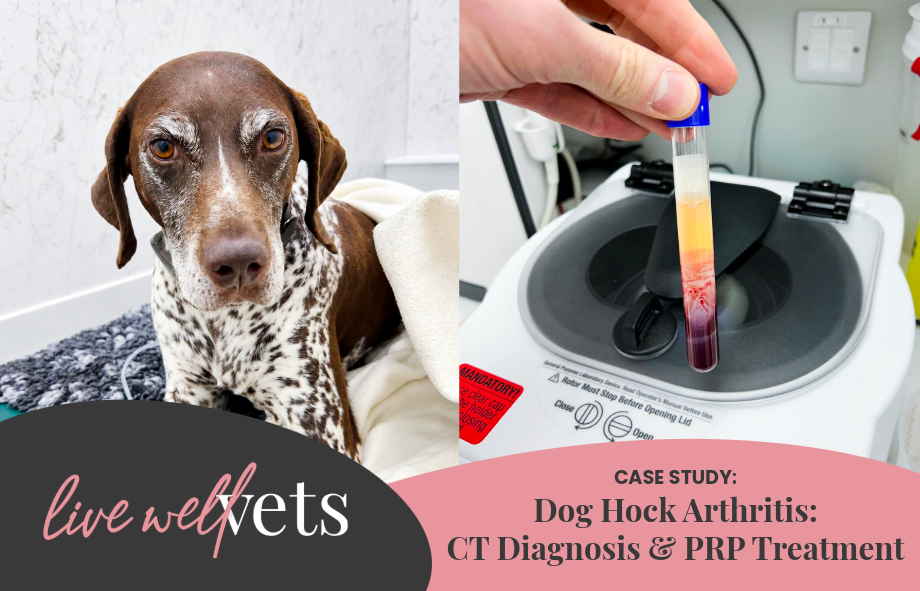
When Lily, a lovely German Shorthaired Pointer, came to Live Well Vets with recurring swelling around both of her hocks, we knew we needed to investigate further.
A dog’s hocks are the joints on the back legs, similar to our ankles. In Lily’s case, the swelling came and went depending on how active she had been.
Anti-inflammatory medication helped initially, but when the swelling returned, we wanted to understand exactly what was happening inside the joints.
A CT scan at our Caerphilly practice helped us identify arthritis affecting both hocks and gave us the information we needed to plan Lily’s ongoing treatment.
As part of her arthritis management, Lily also received platelet-rich plasma, or PRP, treatment.
Why Were Lily’s Hocks Swollen?
There are several possible causes of a swollen hock in dogs, including arthritis, inflammation, injury and problems affecting the ligaments, tendons or surrounding soft tissues.
Because Lily’s swelling was recurring and affecting both hocks, we decided that further diagnostic imaging would be useful.
Lily had a CT scan at our Caerphilly practice, allowing us to examine both joints in much greater detail.
CT scanning produces detailed cross-sectional images of the body and can be particularly helpful when investigating complex problems affecting bones and joints.
For Lily, it allowed us to look closely at both hocks and find out what was causing the repeated swelling.
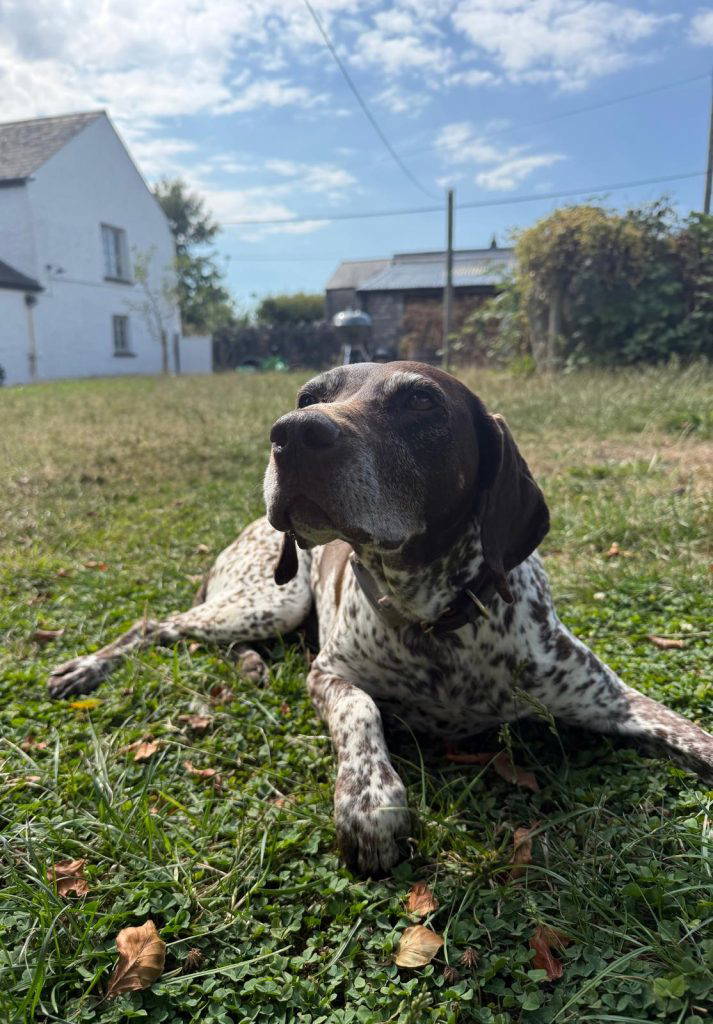
What Did Lily’s CT Scan Show?
Lily’s CT scan showed osteoarthritis in both hocks.
There was also inflammation of the joint lining, a small amount of additional joint fluid and swelling in the tissues surrounding the joints.
Several small mineralised fragments were visible around the hocks too. These may have developed because of long-term wear and tear or an older injury.
Importantly, there was no active fracture or aggressive bone lesion.
The CT findings gave us a much clearer explanation for Lily’s recurring hock swelling and helped explain why it was often more noticeable following exercise.
With a clearer understanding of the changes affecting her joints, we could then plan the most appropriate way to manage her arthritis.
Dog Hock Arthritis: How Is It Managed?
Osteoarthritis is a progressive condition affecting the whole joint. Although it cannot usually be cured, there are several ways we can help manage discomfort and support a dog’s mobility and quality of life.
Treatment should be tailored to the individual dog and may include:
- Anti-inflammatory medication
- Additional pain relief where appropriate
- Sensible, controlled exercise
- Weight management where necessary
- Rehabilitation or physiotherapy in suitable cases
- Ongoing monitoring of comfort and mobility
Keeping dogs moving in a careful and appropriate way can be an important part of arthritis management, helping to maintain strength and mobility without placing excessive strain on painful joints.
For Lily, conservative management was considered the most appropriate approach.
She also received PRP, or platelet-rich plasma therapy, as part of her treatment plan.
What Is PRP Treatment for Dogs?
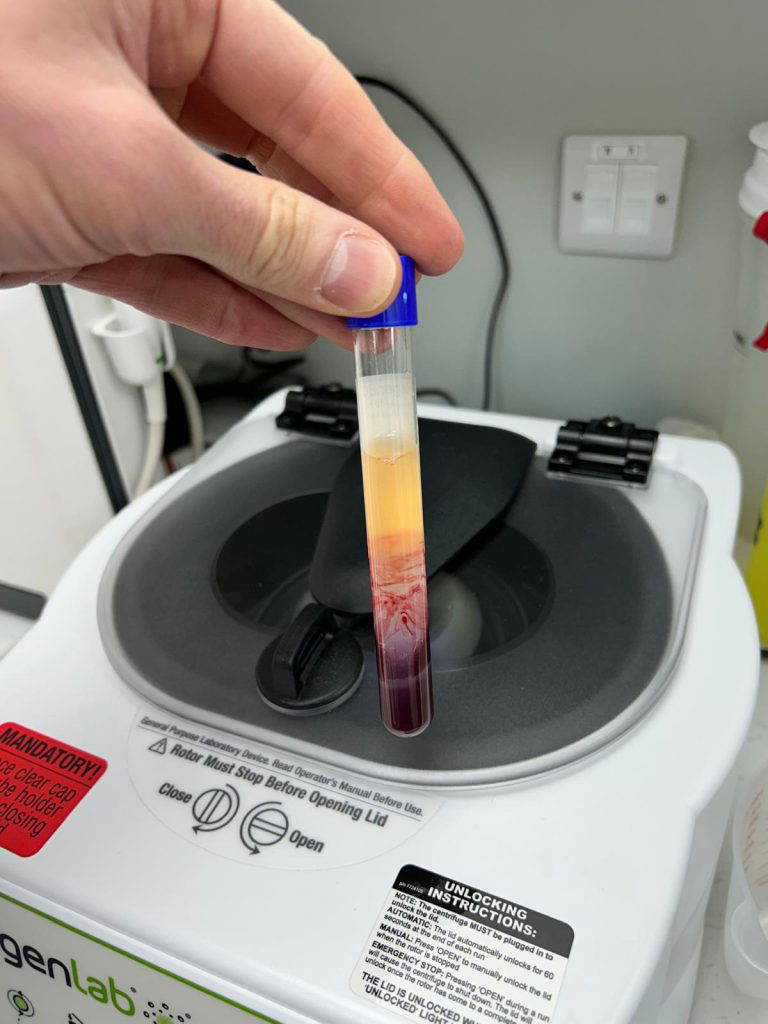
Platelet-rich plasma, commonly known as PRP, is prepared using a small sample of the patient’s own blood.
The blood is processed to produce a preparation containing a higher concentration of platelets. This is then injected into the affected area.
Platelets contain growth factors and other biologically active substances involved in the body’s natural healing and inflammatory responses.
PRP may be used in selected veterinary orthopaedic cases, including some dogs with osteoarthritis and certain soft-tissue conditions.
Treatment response varies between individual dogs and PRP does not necessarily produce an immediate improvement. Where a dog does respond, changes may develop gradually over several weeks.
Research into PRP for canine osteoarthritis is continuing, so it is best considered as one potential part of an individual arthritis-management plan rather than a treatment that will be suitable for every dog.
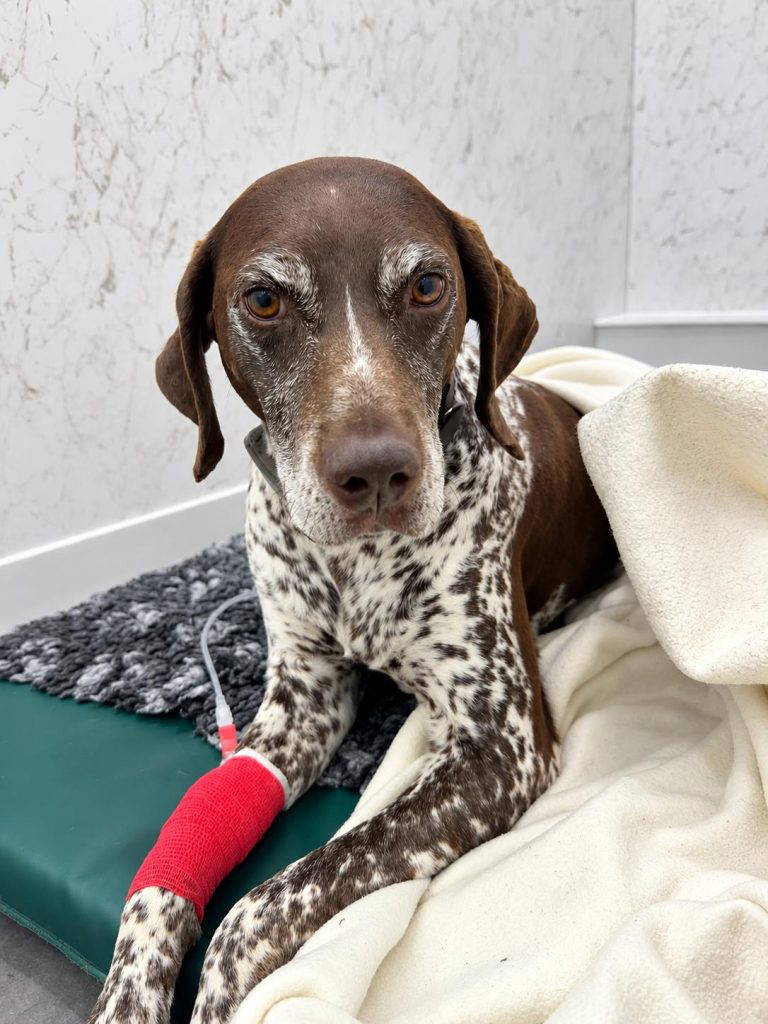
Encouragingly, Lily’s owners have already noticed some improvement following her treatment.
We’ll continue to monitor her comfort, mobility and activity levels and adjust her arthritis management where needed.
Can Arthritis Cause Swollen Hocks in Dogs?
Yes. Arthritis can be one cause of hock swelling in dogs.
Osteoarthritis causes changes throughout the affected joint and can be associated with inflammation, increased joint fluid, pain, stiffness and changes in the surrounding tissues.
The swelling may fluctuate and can sometimes become more noticeable following increased activity or exercise.
However, arthritis is not the only possible explanation for a swollen dog hock.
Other possible causes include:
- Injury or trauma
- Ligament or tendon problems
- Joint inflammation
- Infection
- Other orthopaedic or joint conditions
If your dog develops persistent or recurring hock swelling, stiffness, pain or lameness, it is important to have them examined by a vet rather than assuming arthritis is the cause.
When Should I See a Vet About My Dog’s Swollen Hock?
We recommend speaking to your vet if your dog has:
- Swelling that does not settle
- Recurring hock swelling after exercise
- Stiffness or difficulty getting up
- Lameness or reluctance to walk
- Pain when the leg or joint is touched
- Reduced activity
- Difficulty with stairs, jumping or getting into the car
- Changes in behaviour that could indicate discomfort
Early assessment can help identify what is causing the swelling and allow an appropriate treatment or pain-management plan to be put in place.
How CT Scanning Helped Us Diagnose Lily’s Hock Arthritis
Many causes of lameness and joint pain can be investigated through a physical examination and X-rays.
In some cases, however, advanced diagnostic imaging such as CT scanning can give us additional information.
Our in-house CT scanner at Live Well Vets Caerphilly produces detailed images of areas such as bones and joints, allowing our veterinary team to investigate some conditions more closely.
For Lily, the CT scan allowed us to assess both hocks in detail and identify the arthritic and inflammatory changes responsible for her recurring swelling.
It also helped us rule out other significant problems, including an active fracture or aggressive bone lesion.
Having this information meant we could create a management plan based on a much clearer understanding of what was happening inside Lily’s joints.
From CT Diagnosis to PRP Treatment
Lily’s case is a good example of how advanced diagnostic imaging can help guide treatment.
Her recurring hock swelling told us that something was wrong, but the CT scan gave us much more detailed information about the changes affecting both joints.
Once we had diagnosed osteoarthritis, we could focus on managing Lily’s discomfort and mobility.
Alongside conservative arthritis management, PRP was chosen as an additional treatment option for Lily.
Most importantly, her owners have already noticed some improvement, and we’ll continue to monitor her progress so that her treatment can be adjusted as her needs change.
Our aim is to help Lily remain as comfortable, mobile and active as possible.
CT Scanning and PRP Treatment at Live Well Vets
We offer in-house CT scanning at our Caerphilly practice, helping us investigate a range of orthopaedic and other conditions without patients needing to travel elsewhere for imaging.
PRP treatment is also available at Live Well Vets for selected patients where our vets feel it may be an appropriate part of their treatment plan.
If your dog has unexplained lameness, recurring joint swelling or an orthopaedic condition that may benefit from further investigation, contact Live Well Vets to discuss the most appropriate next steps.
We can also accept suitable CT and orthopaedic cases referred to our Caerphilly practice by other veterinary practices. For CT-specific referral information, visit our CT referrals page.
FAQs
Frequently asked questions about dog hock arthritis, CT and PRP
Why is my dog’s hock swollen?
There are several possible causes of a swollen hock in dogs, including arthritis, inflammation, injury, ligament or tendon problems, infection and other joint conditions. If the swelling is persistent, keeps returning or is accompanied by pain or lameness, your dog should be examined by a vet.
Can arthritis cause swelling in a dog’s hock?
Yes. Osteoarthritis can cause changes and inflammation within the joint and surrounding tissues, which may lead to swelling, stiffness, discomfort and reduced mobility.
Can dog hock arthritis become worse after exercise?
Signs associated with an arthritic joint can sometimes become more noticeable following increased activity. You may notice more swelling, stiffness, discomfort or lameness after exercise. Your vet can advise you on an appropriate type and amount of activity for your individual dog.
Can a CT scan diagnose arthritis in dogs?
CT scanning produces detailed images of bones and joints and can help vets identify changes associated with arthritis and other orthopaedic conditions. Not every dog with suspected arthritis will require a CT scan. Your vet may recommend examination, X-rays or other diagnostic tests depending on your dog’s symptoms.
What is PRP treatment for dogs?
PRP stands for platelet-rich plasma. It is produced from a sample of the dog’s own blood and contains a concentration of platelets. PRP may be used in selected veterinary orthopaedic and soft-tissue cases, including some dogs with osteoarthritis.
Does PRP work for arthritis in dogs?
Research suggests PRP may provide benefits for some dogs with osteoarthritis, but responses vary between individual patients and the available evidence is still developing. Your vet can advise whether PRP may be suitable as part of your dog’s overall arthritis-management plan.
How quickly does PRP work in dogs?
PRP does not necessarily produce an immediate change. Where improvement occurs, it may develop gradually over several weeks. Your vet will usually monitor your dog’s comfort and mobility following treatment.
Do Live Well Vets offer PRP treatment for dogs?
Yes. PRP treatment is available at Live Well Vets and may be recommended for suitable patients with certain joint or soft-tissue conditions. Your vet will assess your pet and discuss whether PRP could form an appropriate part of their individual treatment plan.
Do Live Well Vets offer CT scans for dogs?
Yes. We have an in-house CT scanner at our Caerphilly veterinary practice. CT scanning is available for suitable Live Well Vets patients, and we can also accept CT referrals from other veterinary practices.